
Voluntary manslaughter is a significant concept in criminal law that addresses situations where an individual intentionally causes the death of another person under circumstances that reduce, but do not justify, the offense. Unlike murder, which involves premeditation and malice, it typically arises from sudden emotional reactions triggered by provocation.
The law recognizes that intense emotions such as anger, fear, or jealousy can impair judgment, leading individuals to act impulsively. As a result, while the act remains unlawful, it is treated with less severity than murder due to the presence of mitigating factors. Understanding this requires examining its legal elements, types, defenses, penalties, and the challenges involved in proving such cases.
| Aspect | Description |
| Voluntary manslaughter | Intentional killing under mitigating circumstances, often due to sudden provocation or emotional disturbance. |
| Key Concept | Heat of passion” – intense emotional state impairing judgment. |
| Main Elements | Intent to kill, adequate provocation, loss of self-control, absence of premeditation. |
| Types | Heat-of-passion manslaughter, imperfect self-defense, and sudden provocation cases. |
| Difference from Murder | No premeditation; reduced moral blame; lesser penalties compared to murder. |
| Legal Defenses | Provocation, imperfect self-defense, diminished capacity. |
| Penalties | Serious felony with reduced sentences compared to murder; may include prison, fines, or probation. |
| Legal Process | Investigation, trial, evidence presentation, verdict, and sentencing. |
| Challenges in Proof | Difficulty proving emotional state, adequate provocation, and distinguishing from murder. |
| Importance | Promotes legal awareness, emotional control, and understanding of consequences. |
| Conclusion Insight | Balances accountability with compassion by considering human emotional behavior |
What is Voluntary Manslaughter?

Voluntary manslaughter is defined as an intentional killing that occurs under circumstances that mitigate, but do not excuse, the act. The most common scenario involves a person acting in response to sudden provocation that would cause a reasonable person to lose self-control. The law acknowledges that although the act of killing is unlawful, the emotional state of the offender reduces the severity of the crime compared to murder.
A key concept associated with it is the “heat of passion.” This refers to a state of intense emotional disturbance, such as anger, fear, or jealousy, which temporarily impairs judgment. For example, discovering a spouse’s infidelity and reacting violently in the moment may be considered this rather than murder, depending on the circumstances.
Elements
- To establish voluntary manslaughter, certain legal elements must be present.
- One essential element is the intent to kill or cause serious harm at the moment of the act.
- Although the act is not premeditated, the offender must have intended the harmful action at the time it occurred.
- Another critical element is adequate provocation that could cause a reasonable person to lose self-control.
- Not all forms of anger or frustration qualify as adequate provocation, as the law sets specific standards.
- Loss of self-control is also a necessary element in these types of cases.
- The defendant must have acted impulsively without sufficient time to cool down.
- If there was a delay between the provocation and the act, the charge may be elevated to murder.
- The absence of premeditation distinguishes it from more serious homicide offenses.
- The killing must occur suddenly without prior planning or intent.
Types
Heat of Passion Manslaughter
Voluntary manslaughter can be categorized into different types based on the circumstances of the act. The most common type is “heat of passion” manslaughter, where the offender reacts immediately to a provoking event.
Imperfect Self-Defense
Another type is imperfect self-defense. This occurs when a person believes they are in danger and uses deadly force, but their belief is unreasonable or excessive. While this does not fully justify the act, it may reduce the charge from murder to voluntary manslaughter.
Sudden Provocation Cases
Sudden provocation cases also fall under this category. These involve situations where an unexpected event triggers an emotional response, leading to the unlawful killing. Each type highlights the importance of context and emotional state in determining criminal liability.
Difference Between Voluntary Manslaughter and Murder

The primary difference between manslaughter and murder lies in intent and premeditation. Murder typically involves malice aforethought, meaning the offender planned or intended the killing in advance. In contrast, manslaughter occurs without premeditation and is driven by sudden emotional disturbance.
Another difference is the level of moral blame. While both crimes involve unlawful killing, voluntary manslaughter is considered less severe because it recognizes the influence of provocation and emotional distress.
Legal consequences also differ significantly. Murder usually carries harsher penalties, including longer prison sentences, whereas manslaughter may result in reduced sentencing due to mitigating circumstances.
Legal Defenses
- Several legal defenses may be used in manslaughter cases.
- One of the most common defenses is provocation, which argues that the defendant acted in response to a situation that would provoke a reasonable person.
- Self-defense may also be claimed, especially in cases of imperfect self-defense.
- In imperfect self-defense, the force used may not be fully justified, but can reduce the severity of the charge.
- Another possible defense is diminished capacity, where the defendant’s mental state affects their ability to make rational decisions.
- This defense does not excuse the act but may influence the court’s judgment and sentencing.
Penalties and Punishments

Severity of the Offense
The penalties for voluntary manslaughter vary depending on the legal system and the circumstances of the case. Generally, it is considered a serious felony and can result in significant prison sentences.
Factors Affecting Sentencing
Factors such as the severity of the act, the defendant’s criminal history, and the presence of aggravating or mitigating circumstances can influence sentencing. In some cases, fines, probation, or counseling may also be imposed in addition to imprisonment.
Comparison with Murder Penalties
Compared to murder, the penalties for manslaughter are typically less severe, reflecting the reduced level of intent and moral culpability.
Legal Process
The legal process begins with the arrest and charging of the suspect. Law enforcement agencies conduct investigations to gather evidence and determine the appropriate charges.
During the trial, both the prosecution and defense present their arguments, evidence, and witnesses. The court examines whether the elements of manslaughter are satisfied and whether any defenses apply.
The verdict is then delivered by a judge or jury, followed by sentencing if the defendant is found guilty. In some cases, plea bargains may be negotiated to reduce charges or penalties.
Challenges
- Proving manslaughter can be challenging because it requires demonstrating the defendant’s emotional state at the time of the act.
- Establishing adequate provocation is often difficult, as it depends on subjective interpretations of what constitutes a reasonable reaction.
- Another challenge is distinguishing manslaughter from murder in legal proceedings.
- Prosecutors may argue that the act was premeditated, while the defense seeks to prove it was impulsive.
- Evidence such as witness testimony, expert opinions, and psychological evaluations plays a crucial role in resolving these challenges.
Importance of Legal Awareness
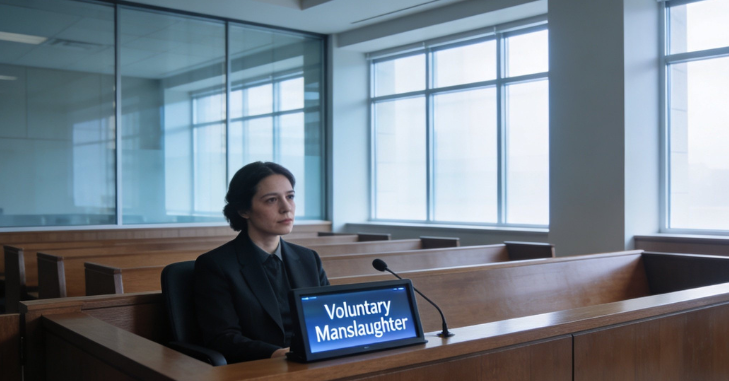
Understanding voluntary manslaughter is important for promoting legal awareness and preventing violent behavior. Knowledge of the law helps individuals recognize the consequences of acting impulsively in emotionally charged situations.
It also emphasizes the importance of conflict resolution and emotional control. By understanding the legal implications of their actions, individuals can make more informed decisions and avoid severe consequences.
Conclusion
Voluntary manslaughter is a complex legal concept that highlights the role of human emotions in criminal behavior. While it involves the unlawful killing of another person, it differs from murder due to the absence of premeditation and the presence of provocation.
By examining the elements, types, causes, and legal processes associated with manslaughter, it becomes clear that the law seeks to balance accountability with compassion. This ensures that justice is served while acknowledging the realities of human behavior. Ultimately, understanding voluntary manslaughter contributes to a more informed society and a fairer legal system.
Want to know about White-Collar Crime Attorney: Complete Guide to Legal Defense, Financial Crime Cases, Client Representation, Strategies, Costs, and Role in Complex Federal Investigations Check out our Criminal Law category.
FAQs
The primary difference between voluntary and involuntary actions is the presence or absence of conscious control. Voluntary actions, such as walking or speaking, are intentionally performed and controlled by the somatic nervous system. Involuntary actions occur automatically without conscious effort, like heartbeats, breathing, and digestion, and are controlled by the autonomic nervous system and reflexes.
The maximum sentence a judge can impose for manslaughter is imprisonment for life. The judge may impose other sentences, including immediate imprisonment, suspended imprisonment, or a community sentence.
Legal Ramifications. Both crimes have severe legal consequences, but they can vary in severity. Voluntary manslaughter typically leads to heavier sentences due to the element of intent, while involuntary manslaughter, although serious, may result in lighter penalties given the lack of intentional harm.