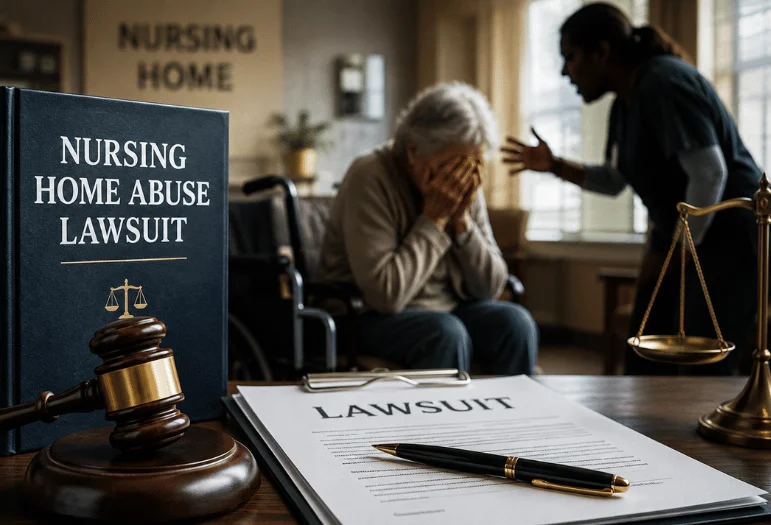
When abuse or neglect causes a resident serious harm, a nursing home abuse lawsuit may provide a path to accountability and compensation. Families should protect the resident first, report urgent dangers, preserve evidence, and seek state-specific legal advice promptly. Filing deadlines and legal requirements vary by location.
| Key question | Practical answer |
| Who may have a claim? | An injured resident or an authorized representative, depending on state law |
| What conduct may qualify? | Physical, sexual, emotional, or financial abuse, as well as harmful neglect |
| What evidence matters? | Medical records, photographs, witness accounts, care plans, reports, and facility records |
| Who may be responsible? | The facility, its owner, management companies, contractors, or individual caregivers |
| What damages may be available? | Medical costs, relocation expenses, pain and suffering, and wrongful death damages |
| When should a family act? | As soon as the resident is safe because filing deadlines and evidence risks are time-sensitive |
Direct answer: You may have a legal claim when a care facility, employee, or contractor violated a duty owed to a resident and caused measurable harm. The strongest cases connect specific misconduct to an injury, worsening condition, financial loss, or death through records, witness accounts, photographs, and qualified professional opinions.
Federal regulations give residents of covered facilities the right to be free from abuse, neglect, exploitation, property misappropriation, involuntary seclusion, and unnecessary restraints. Facilities must also maintain procedures for preventing, investigating, and reporting suspected violations.
How a Nursing Home Abuse Lawsuit Works

Most claims seek civil compensation rather than criminal punishment. A prosecutor decides whether to bring criminal charges. The resident or an authorized representative may pursue a separate civil case.
A negligence claim usually requires proof of four connected elements:
- The facility or caregiver owed the resident a legal duty.
- The defendant failed to meet the required standard of care.
- That failure caused or worsened an injury.
- The resident suffered physical, emotional, or financial damages.
These elements sound simple, but causation can become disputed. A facility may argue that an injury resulted from age, illness, medication, or an unavoidable medical event. Medical records and expert analysis may show whether poor care contributed to the outcome.
Other legal theories may apply. They can include intentional misconduct, medical negligence, wrongful death, breach of contract, state elder-protection laws, or violations of specific resident rights. Our related guide, Wrongful Death Suit in the U.S, goes further into this.
Seven Steps Families Should Take
1. Protect the resident from immediate danger
Call emergency services when the resident faces an urgent medical threat or immediate violence. Consider requesting hospital evaluation when an unexplained injury, altered mental state, severe dehydration, breathing problem, or suspected assault requires prompt care.
A resident’s safety comes before evidence collection. Do not confront a suspected abuser when confrontation could place the resident or another person at risk.
2. Report the concern to the right authorities
Depending on the circumstances, a report may go to:
- Local law enforcement
- Adult Protective Services
- The state nursing-home survey or licensing agency
- The Long-Term Care Ombudsman Program
- Facility administration
CMS directs residents and families to resources for reporting quality-of-care concerns and filing complaints. The National Center on Elder Abuse also provides reporting resources for suspected mistreatment.
An administrative complaint and a civil case serve different purposes. A government agency may inspect, investigate, cite, or penalize a facility. A private claim seeks relief for the individual resident.
3. Create a factual timeline
Write down dates, times, names, injuries, symptoms, conversations, and changes in the resident’s condition. Record the resident’s exact words when possible.
Keep observations separate from conclusions. For example, write “the resident had a new purple bruise on the left forearm” rather than stating who caused it without supporting evidence.
Save emails, text messages, voicemail recordings, visitor logs, bills, and written complaints. Preserve original files rather than editing them.
4. Photograph visible conditions lawfully
Photographs may document pressure injuries, bruises, dirty bedding, unsafe equipment, broken call buttons, or poor room conditions. Note the date and who took each photograph.
Privacy, recording, and consent laws differ by state. Ask a local lawyer before installing a hidden camera or recording private conversations.
5. Request and preserve records
Relevant documents may include:
- Medical and hospital records
- Nursing notes and care plans
- Medication administration records
- Fall assessments and skin checks
- Incident reports
- Staffing assignments
- Facility policies
- Billing and insurance records
A lawyer may seek additional material through the formal evidence process. The existing LawEzo guide to medical negligence lawyers explains how attorneys review clinical records and work with medical experts.
6. Review the facility’s public history
CMS Care Compare lets users examine Medicare-certified facilities and compare available staffing and quality information. Public inspection findings can provide context, although a prior citation does not prove what happened in an individual case.
Look for repeated concerns involving supervision, pressure injuries, medication management, falls, infection control, or resident protection.
7. Obtain a state-specific case review
Strict filing deadlines apply. The correct deadline may depend on the state, the type of defendant, when the injury was discovered, and whether the resident died.
Some jurisdictions also require advance notices, medical expert review, or other steps before filing. A lawyer from a qualified nursing home abuse law firm can identify the applicable rules and parties.
Evidence That Can Strengthen the Claim

No single document proves every case. Strong claims often combine several sources that support the same timeline.
Medical charts may document injuries, malnutrition, dehydration, infections, medication errors, or delayed treatment. Earlier records can establish the resident’s condition before the suspected misconduct.
Witnesses may include relatives, visitors, roommates, former employees, emergency personnel, and treating professionals. Their testimony carries more weight when it describes specific observations rather than rumors.
Facility records may show whether staff followed the resident’s care plan. They can also reveal gaps in monitoring, delayed responses, missed medications, or unexplained changes in documentation.
Expert witnesses may explain accepted care practices and whether a failure probably caused harm. The LawEzo overview of a medical lawyer’s responsibilities provides more context about record review, expert consultation, and courtroom representation.
Who Can File and Who May Be Liable?
A competent resident can generally bring a claim personally. When the resident cannot manage legal affairs, state law determines whether an agent, guardian, conservator, or another authorized person may act.
After a death, the estate’s personal representative or eligible family members may have authority to pursue survival or wrongful death claims. The rules differ widely, so family relationship alone may not establish filing authority.
Possible defendants include the licensed facility, corporate owner, management company, staffing contractor, medical provider, or individual employee. Liability depends on each party’s duties, conduct, and connection to the harm.
What Compensation May Be Available?
Compensation is based on documented losses, applicable law, and the strength of the evidence. It may include:
- Medical treatment and rehabilitation
- Costs of moving to a safer facility
- Counseling or psychological care
- Pain, suffering, and emotional distress
- Loss of personal property or stolen funds
- Funeral expenses and wrongful death losses
Punitive damages may be available in limited cases involving especially serious conduct. State law may cap certain damages or restrict which losses can be recovered.
Insurers often participate in settlement discussions for facilities and professional defendants. LawEzo’s guide to the role of an insurance claim lawyer explains common issues involving documentation, claim evaluation, negotiation, and disputed coverage.
Avoid relying on advertised “average settlement” figures. Case value depends on the injury, available evidence, responsible parties, insurance coverage, state law, and recoverable damages.
How Long Can a Case Take?
There is no universal timeline. A focused claim with clear records may resolve through settlement. A disputed case involving several defendants, extensive medical evidence, or a trial can take much longer.
The investigation usually comes first. The parties may then exchange evidence, question witnesses, obtain expert opinions, file motions, and negotiate. A settlement can occur before filing, during litigation, or shortly before trial.
The statute of limitations is different from the time needed to finish the case. It controls when the claim must be started. Missing it may prevent recovery, even when the underlying allegations are serious.
Facility Reporting Deadlines Are Not Lawsuit Deadlines

Federal regulations impose reporting and investigation duties on covered facilities. Allegations involving abuse or serious bodily injury must be reported immediately and no later than two hours. Other covered allegations generally carry a 24-hour reporting limit.
The facility must investigate and report its results to specified officials within five working days. These rules govern facility reporting. They do not determine the family’s civil filing deadline, which depends on applicable state law.
Protect the Resident and Preserve the Facts
Act promptly when you suspect serious mistreatment. Secure medical care, report urgent dangers, document what happened, preserve original records, and avoid signing releases before receiving legal advice.
A qualified attorney can assess who may file, identify responsible parties, preserve time-sensitive evidence, and calculate the correct deadline. This article provides general legal information and does not replace advice from a licensed lawyer in the relevant jurisdiction.
Frequently Asked Questions
Yes, harmful neglect may support a claim when a facility failed to provide required care, and that failure caused an injury, worsening condition, or death. Examples may include untreated pressure injuries, lack of hydration, medication failures, unsafe supervision, or delayed medical attention.
No. Video may help, but cases can be supported by medical records, photographs, witness accounts, inspection findings, care plans, staffing records, and expert opinions.
Dementia does not remove a resident’s legal protections. It may affect how testimony is evaluated and who has authority to act. Records, behavior changes, clinical findings, and independent witnesses can become especially important.
No. A complaint may trigger an agency investigation or inspection, but it does not usually file a private civil case. Families may need to take separate legal action within the applicable deadline.
Possibly. An estate representative or eligible relatives may be able to bring survival or wrongful death claims. The available parties, deadlines, and damages depend on state law.